Saturday, February 8, 2025

The Critical Need for Staff Training in ABA Within the School Setting


Students with autism, neurodiversity, or developmental disabilities spend a significant portion of their day in school. Applied Behavior Analysis (ABA) is the gold standard of treatment, rooted in principles that align with how all individuals learn. Given this, it is essential that school staff receive proper training in progressive ABA to implement strategies effectively. Without adequate knowledge and skill, interventions often fail to address the root cause of behaviors, leading to ineffective or even harmful outcomes for students, staff, and the entire learning environment.

The Consequences of Inadequate ABA Training

Case Study 1: Misaligned Behavior Management

Consider a Student who frequently screams, disrupting both her own learning and that of her peers. In many schools, staff responses are often misaligned with the function of the behavior. Common approaches might include:

  • Reprimands and consequences that inadvertently reinforce the screaming
  • Escalations by staff that mirror the student's distress
  • Lofty behavioral expectations that exceed the student’s current skill level

The result? Increased episodes of screaming, frustration for both staff, classmates, and Student resulting in a classroom environment that feels chaotic rather than structured.

How ABA Should Be Applied

To effectively intervene, we must ask two fundamental questions:

  1. What function does the screaming serve? (Why is she screaming?)
  2. What reinforcement can be used to teach a replacement behavior?

Through careful observation, it was determined that this student’s screaming serves two distinct functions:

  1. A reaction to stress – She screams when classmates cry, lacking coping strategies for distressing sounds.
  2. A form of protest – She screams when asked to do something she does not want to do.

Function-Based Intervention

For the stress-related screaming:

  • Current response: She screams, moves away (other side of the classroom), plugs her ears, but does not find relief, escalating into more intense behaviors such as louder screams, crying, and throwing objects.
  • ABA-based intervention: Teach her a functional replacement skill—requesting to leave the room. In sum, this skill must be introduced, practiced, and reinforced consistently. By honoring her request every time, staff reinforce the new, appropriate behavior, ensuring she feels supported. Over time, she can also be taught self-calming strategies and tolerance-building techniques. 

For the protest-related screaming:

  • Current response: Screaming leads to either reinforcement (avoiding the task) or further escalation from staff, loss of other rewards/fun activities-punitive consequences that do not align with the behavior function.
  • ABA-based intervention: Teaching alternative ways to protest appropriately (e.g., verbal request) while ensuring noncompliance does not result in avoidance of necessary tasks. Intervention that provides competing levels of reinforcement for the absent of protest and/or complying with directives associated with less desired tasks.

Effective behavior change requires analytical thinking, patience, strategic planning, and consistency—skills that school staff need but often lack due to insufficient training.  On some level it may seem like common sense and easy but when in fact the process is intricate, nuanced, and relies heavily on in the moment analysis and decision making. 

Case Study 2: Teaching Functional Communication and Structure

Another student does not understand school expectations and lacks a functional way to communicate. He primarily relies on self-initiated actions, such as physically guiding people to what he wants. His primary interest? The playground swings.

The Challenge

Without training in ABA, staff spend their day:

  • Blocking his attempts to leave the classroom
  • Redirecting him constantly
  • Managing escalating crises when he becomes aggressive

This approach results in exhaustion for staff and frustration for the student, who has no structured or informed way of how and when he can access what he desires 

The ABA-Based Solution

A reinforcement-based system was developed:

  1. A "work" area with 3 chairs (chair for interventionist, child, materials), a token board, and 3"x5" picture card of the swings was introduced, initially placed approximately 15 feet from the swings.
  2. The student was given one token and physically guided to the chair, where he placed the final token on the board and exchanged a picture of the swing for immediate access.
  3. Over an hour session, the chairs were systematically moved closer to the classroom, and the number of tokens required increased.
  4. Within an hour of structured practice, the student independently transitioned, calmly placed his token on the board, sat calmly and engaged in work trials while earning 6 more tokens with no aggression or escape attempts.

This structured, reinforcement-based approach transformed a daily struggle into a functional learning opportunity. Overtime the number of tokens and trials will increase as well as the time lapse and number of trials between tokens will increase. 

Why Staff Training in ABA is Critical

The above cases illustrate how poorly implemented strategies create stress and chaos, while ABA-based interventions foster success and independence. Yet, despite its importance, ABA training is widely undervalued and often absent in teacher preparation programs, school training initiatives, and educational professional development.

Staff—including administrators, teachers, and paraprofessionals—must be equipped with the skills to:

  • Identify the function of behaviors
  • Apply reinforcement-based strategies
  • Teach replacement skills effectively
  • Implement interventions consistently

Without this training, students with autism and developmental disabilities are left without the tools they need to thrive, and school staff struggle with behaviors they feel ill-equipped to manage. A commitment to proper ABA training ensures a more effective, supportive, and successful learning environment for everyone. When staff are adequately trained and skilled most interventions can be developed within minutes and fine tuned within days versus the need for long, drawn out formal assessments. In some cases Functional Behavior Assessments are necessary but this can be the exception not the norm

Let’s prioritize training in ABA—not just for the sake of our students, but for the overall success of our schools.

Wednesday, January 29, 2025

Is ABA Good or Bad? It’s More Complicated Than That.

 Whether one believes in Applied Behavior Analysis (ABA) or not is irrelevant. What we do know is that a strong body of research, spanning over 100 years, demonstrates measurable outcomes. ABA is based on learning theory and applies to all of us—not just individuals with autism or other developmental disabilities. It is embedded in how we teach children, coach athletes, and even learn to play musical instruments.

So why does ABA have such a bad reputation?

Like anything else, ABA is only as good as the people implementing it. Take water, for example. Water is neither good nor bad—it simply is. It helps plants grow, but too little or too much can be harmful, even deadly. ABA, in its purest form, is just a tool. Its impact—positive or negative—depends on how it is applied.

Yes, ABA can be bad. It can be punitive, rigid, and even harmful when used incorrectly. But it can also be incredible. When implemented with compassion, at a child’s learning level, and with a focus on individual strengths, ABA can help children express themselves, enjoy learning, engage with peers, and apply their skills in meaningful ways.

Unfortunately, I’ve seen both sides of ABA. I’ve witnessed programs so rigid that they trigger extreme escalations. I’ve seen undertrained staff cause more harm than good. I’ve watched chaotic, mismanaged programs create more disorder instead of progress.

We are at a critical juncture. More children are being diagnosed with autism. More students are entering school without basic readiness skills. And yet, instead of providing structured, evidence-based interventions, many programs are shifting toward putting children entirely in charge—eliminating staff authority, banning the word “no,” and relying solely on choice-based instruction. This often leads to more chaos, making elementary school transitions even harder.

The reality is that we have undertrained teachers, low-quality programs, and a culture of “not my job” attitudes. Checking boxes and hoping for the best is not the answer. We need a system designed to improve outcomes—one that offers meaningful education rather than just the bare minimum. Instead of merely accommodating those who start off behind, we should be providing opportunities to close the gap.

This is both simpler and more challenging than it seems. It requires time, planning, and input from highly qualified professionals. We need comprehensive training to develop skilled educators and interventionists.

Every preschool and elementary program should run like an In-N-Out Burger restaurant—precise, efficient, well-planned, and executed with care. Always mindful, considerate, and individualizing for the one in front of us.  If we can do that for a burger, why can’t we do it for a child?

This article is not affiliated with or endorsed by In-N-Out Burger. The reference is used purely as an analogy for operational efficiency.

Wednesday, July 31, 2024

You shouldn't have to squint: Progressive ABA in the school setting

 "You shouldn't have to squint to see progress" said a parent during the panel at the 2022 annual


Autism Partnership Foundation conference. This resonated with me deeply. I completely agree with this statement. As I reflect on my teaching style, beliefs, expectations, and implementation as a new teacher in 2006, I know my students made progress, but how much did I have to squint to see it? How much did the parents squint? At the time, the TEACCH method was the go-to for an autism-specific classroom. Every student had a visual/tangible schedule, and rotations consisted of language arts, math, art, sensory activities, independent work, discrete trials teaching (DTT), calendar/music, and play. This proved to be an easy system to set up and organize. The students fell in line and learned the routine of the days. Individual skill progress was relatively slow, but some progress, as required by law, was made. Did the progress generalize to any location outside of the structure of my classroom? Rarely.

My expectations and my own skill level were low. My mentor was highly trained and very effective in employing the current method. I was fortunate to learn from the best. If I reflect, I think I believed it was all that was possible-progress-limited to the highly structured setting. I, like many others may not know any better. A well-run classroom employing this model was definitely better for students than a lax class employing the same method. I continued on this path until I was introduced, through intensive training and guidance, to a flexible approach that was "obsessively systematic." This approach resulted in an increased rate of acquisition for my students and greater generalization of skills. Independence, not limited to one 15-minute center per day. While it appears very nice and delivered in a neat package, it is not realistic and does not serve any meaningful purpose. Post-training, independence was a skill that I worked on with my students every minute of every day. It was not simply through experiences of the day and exposure to new various stimuli. It was "obsessively systematic"--I was teaching independence skills. Goals written to independence vs goals written with prompting in place while adhering to some arbitrary prompting continuum.

What I learned is that there were components of this model that were valuable. I kept those and added what is now referred to as a progressive approach to ABA. Having done that, my students' rate of acquisition improved dramatically for most, and definitely for all. DTT was no longer a center either but rather an approach that was intensively implemented all day individually and within group instruction. I learned to appropriately prompt, which by the way, is widely misunderstood. I learned about bribery vs. reinforcement and how closely the two are related, but also how dangerous it can be to misunderstand. In the field, we often hear, "repeated practice." Another misunderstood component. Repeated practice occurs not only over time but more critically, in the moment and coupled with prompt fading. This is when learning occurs.

So, when this parent said, "You shouldn't have to squint to see progress," they meant it. Progress ought to be visible in the moment. In many cases, it is evident and not something we need to wait for. The rate of progress will undoubtedly vary across individuals, generalization will vary too, and each student's potential will vary as well, but progress will be made nevertheless and should be evident. Practice overtime is still necessary but the clarity of what and how to practice is revealed. During times when progress is not occurring, we know we can figure it out, make adjustments, and teach something more efficiently that can result in a meaningful outcome. I encourage teachers and ABA therapists to consider how much squinting you do, your staff has to do, and families must do to see meaningful progress.

Working with students who have delays requires that intervention be as efficient as possible. There is not time to waste. Quality of life depends on it. For additional information or training opportunities please reach out to Practical Solutions for behavior and instruction LLC. Mention this post for a no-cost training session. 

www.pracsol4u.com

practicalsolutions.jw@gmail.com

(949) 287-3683

Friday, July 19, 2024

Kickstart Success: Top tips for teachers preparing for the new year

Whether you are a new teacher or a veteran, the start of a new school year brings an extensive list of preparations. Here, I will share some top tips to kickstart success!

Before I dive into the list, I want to preface this information by acknowledging that the list may seem like common sense. So why would I take the time to share this information when most teachers are already considering many of these items?

When I was working on my bachelor's degree in sociology, one of my professors posed the question, "How is a candy bar violent?" At the time, he also stated, "None of you will understand this concept now. However, ten years down the road, you will recall this lesson and understand." He was right. We continued to listen as he asked questions and explained the violence that ensues to produce something so simplistic. A simple joy that we indulge in so effortlessly, without regard, and before you know it, the candy bar is gone, consumed and never considered again. There is so much in the making of a candy bar.

Once I understood the lesson, I began to view life in this way, paying close attention to what lies within. This holds true for a classroom. In making the simplicity of a room meaningful to students, there is a great deal that must go into its development. These tips embody so much more than the surface of a simple sentence.  At the close of this list, which is not exhaustive by the way, I will provide an example with some detail to consider.

  1. Class List: Familiarize yourself with your class list as soon as possible. This will help you start putting faces to names and anticipate any specific needs.

  2. IEPs and Individual Needs: Review any Individualized Education Programs (IEPs) and make note of individual needs. Planning ahead for accommodations and modifications is crucial for a smooth start.

  3. Classroom Environment: Consider the overall environment of your classroom. Ensure it's welcoming, inclusive, and conducive to learning.

  4. Physical Setup: Arrange your classroom in a way that supports your teaching style and meets the needs of your students. Think about seating arrangements, accessibility, and flow.

  5. Rules, Policies, and Procedures: Establish clear rules, policies, and procedures from day one. Consistency and clarity in these areas set the tone for the year.

  6. Plan for Week One: Have a detailed plan for the first week of school. This should include activities that help build a positive classroom community and introduce routines.

  7. Due Dates: Make note of important due dates and timelines. This helps you stay organized and on track.

  8. Welcome Letter: Prepare a welcome letter to parents and students. Introduce yourself, outline your expectations, and share key information about the upcoming year.

  9. Parent Communication: Establish a system for regular communication with parents. Consistent updates can foster a strong partnership and keep parents informed.

  10. Reinforcement Systems: Develop reinforcement systems to encourage positive behavior and academic effort. These can range from individual rewards to whole-class incentives.

Example: When considering procedures, individual needs, and the physical environment of the classroom, you will want to plan for the execution of each procedure. For instance, upon entering the classroom, students will need to put away their belongings in a designated area, free from cluttering walkways. You should establish a procedure for how students will file into the classroom, put their belongings away, and walk to their seats. Will they line up alphabetically, be called upon based on behavior, be organized by their ability to wait or behavior, or by who is best to stand near one another?


Having systems for all parts of your routine, especially while teaching your students the expectations, rules, policies, and procedures, is critical. How will students be arranged at their seats? Who will be grouped together? Are there any individual accommodations or modifications that must be considered? Starting out hyper-organized will set the tone of the classroom and limit any confusion. It will also highlight areas of need and allow for smoother transitions and necessary adjustments. As your class develops, the environment may become more relaxed without dismantling the structure. Remember to be flexible and make adjustments as needed. Recognize your own mistakes and adjust accordingly. Keep these strategies in mind when new students join the class. If you have any support staff, make sure they are considered in your plans and ensure they clearly understand their role in the class just as each student does. Be certain to hold yourself accountable for adhering to the policies and procedures. Deviating from this will likely cause confusion and frustration for your students.

With these tips in mind, you’ll be well on your way to a successful and rewarding school year! Feel free to email practicalsolutions.jw@gmail.com for questions or more examples of how you can adequately prepare for the upcoming year. 

Wednesday, June 26, 2024

Preparing for Success: The Importance of Training and Preparing for the 2024-25 School Year

 As the 2023-24 school year comes to a close, it's a time for reflection and preparation. At Practical Solutions for behavior and instruction LLC, it is understood that the end of one school year marks the beginning of planning for the next. Training is a crucial part of this planning process, ensuring that educators and staff are equipped with practical solutions to face new challenges head on. Using ABA strategies to build effective programs can benefit all.


  • Reflection 
    • Evaluate Successes and Challenges: A review of the past year will guide the plans for the next. This is a critical step for efficiency and effectiveness. 
    • Identify Training Needs: Consider what didn't work and the areas where training can fill the gaps.  Also consider what did work for existing staff. New staff may require training in those areas. 
  • The Value of Training-Planning for 2024-25
    • Proactive Skill Development: Training from ahead/at the start of the year will ensure staff are well prepared. This will foster confidence and reduce stress levels allowing the focus to be on students. It also sets the stage for program expectations and philosophies.
    • Adaptation to Change: Training in advance is important for helping educators adapt to any new policies or methods introduced in 2024-25.
    • Building Confidence: Training aids in boosting the confidence of educators, enabling them to enter the new school year with a positive mindset.
  • Practical Solutions Offered by Practical Solutions for behavior and instruction LLC
    • Customized Training Programs
    • Evidence Based Strategies
    • Flexible Learning Options 
  • Preparing for Behavioral Challenges
    • Behavioral Interventions: As one of the leading barriers to student learning, behavioral challenges require an understanding of behavior in order to plan and respond appropriately.  This will save time, energy, and social emotional implications. 
    • Reinforcement Techniques: As one of the most impactful and productive methods of addressing behavior challenges, it is more difficult that it seems. Reinforcement requires an understanding of behavior, individuals, and its counterpart- punishment. Lacking the knowledge can lead to negative environments and undesired outcomes.
  • Progressive ABA *Not only for students with autism/neurodiversity
    • Evidence Based Teaching Strategies: Teaching the way students learn (behaviorally: positive behavior/learning how to learn-foundational learning skills/academics).
    • Classroom Management Skills: Most understand the basics but what about the rest? Critical components often missed when planning and executing.
  • Real-World Success Stories
    • Effective Outcomes:
      • 5-day workshop: prerequisite for advanced training: overall staff rating 4.8 out of 5
      • Full class take over- 3-10 days: chaos to calm
      • Partial class takeover- 1 hour per day for 10 days: structure and behavior programs
      • Class lab intensive training- individual programs and training model for classes
Conclusion
Training is critical for staff but often undervalued. Effective training that addresses the needs outlined above is typically a process rather than a one-time, check-the-box event. Studies suggest that didactic training alone has 0% classroom application, while training combined with coaching, consultation, and administration support boasts a 95% carryover, especially when working with motivated and reinforced trainees. 

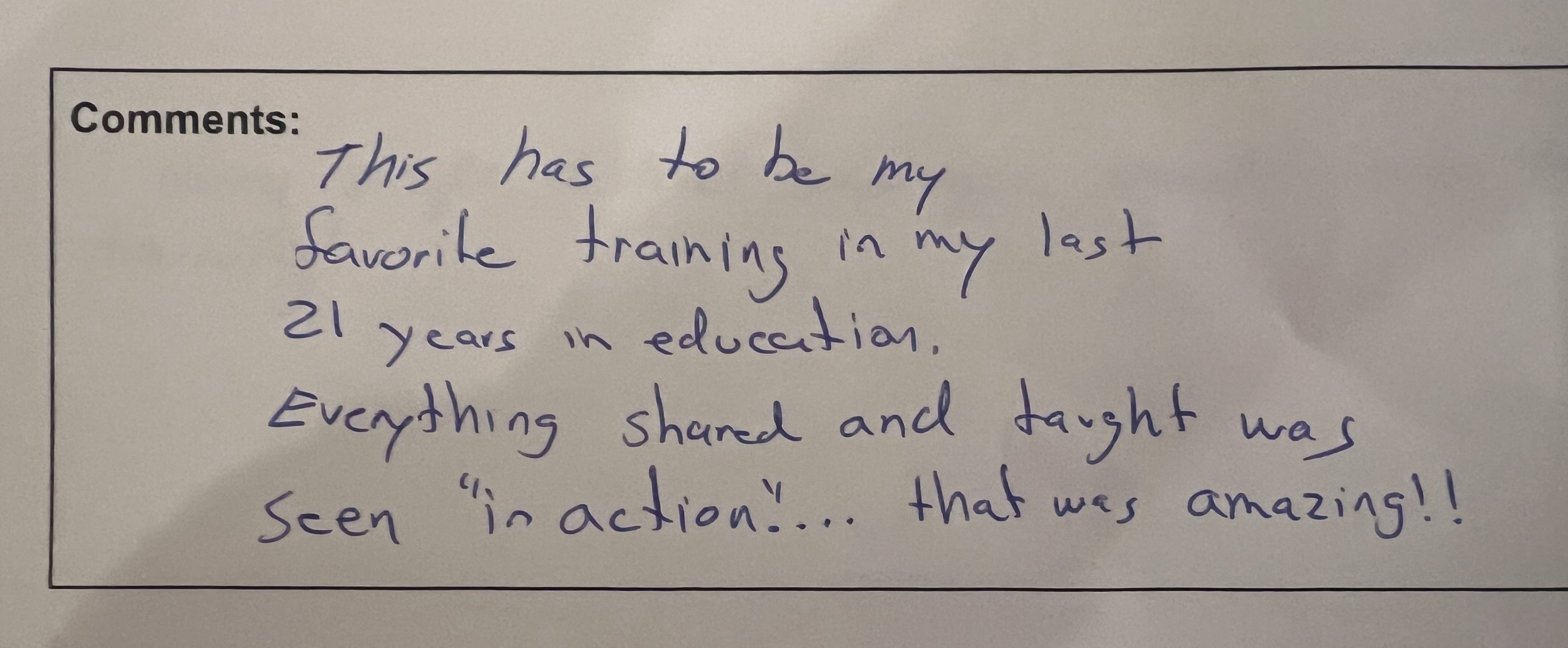
At Practical Solutions for behavior and instruction LLC, training is customized to the wants and needs, strengths, and weaknesses of each client. With extensive experience in a progressive approach to Applied Behavior Analysis (ABA) for school settings and staff training, the outcomes are lasting. Students learn, staff teach, and families are satisfied. The methods taught are evidence based, compassionate, fun, and practical. *sample feedback from participants of 5-day workshops.


Wednesday, June 19, 2024

Progressive ABA in the School Setting: My Personal Experience

This week’s blog is more personal, reflecting on my journey as a learning teacher. I believe an overwhelming majority of teachers enter the profession because they genuinely want to "do good" for students. But what are the barriers to meaningful education? Over the years, I've discovered there isn't a single answer to that question. However, several key issues stand out:
  1. Lack of Meaningful Education/Training: Many teachers are not adequately prepared for the current educational climate. The training often falls short of equipping them with the necessary skills and knowledge beyond the adopted curriculums and basics of a classroom.

  2. Low Expectations: There are often low expectations for both educators and students. This can stifle potential and hinder progress. 

  3. Inadequate Mentorship: Effective mentors are crucial, yet they are often in short supply. New teachers need guidance and support from exceptional teachers to develop their abilities.

  4. Unrealistic Expectations for Entry-Level Teachers: Expecting new teachers to be experts right away results in weak training opportunities. Instead of learning and growing, they are often overwhelmed and underprepared.

Our mission as educators is to facilitate learning that will lead to a meaningful life, but the business of education often contradicts this goal.

I began teaching in 2006 as an intern for a 1st/2nd grade moderate to severe special day class specifically designed for students with autism. As a mother of a child with Spina Bifida, I initially imagined myself teaching a class for students with Orthopedic Impairment. This was where my experience lay. Instead, I accepted a position in a field where I had no experience. I did not mind, because I was eager and motivated.

I was blessed to have an experienced, driven mentor and colleague. Without her, I would not be where I am today. She taught me to be systematic, always teach, have high expectations, remain patient, and ask for help. She was a top-notch model for me. She was trained in (rigid) ABA, which I had never heard of at the time. She was then trained in the TEACCH model, that we used until 2011 when we were introduced to what is now known as a
progressive
approach to ABA.

The intensive training we received from Autism Partnership changed my career and the outlook I had for my students. This wasn't some mystical secret. It was (is) simply good stuff. This was (is) quality at its finest.

Through this progressive approach to ABA, I learned how to effectively implement evidence-based practices, leading to significant improvements in my students' progress. It reinforced the importance of high expectations and the need for ongoing, meaningful professional development.

Upon completing the six-day intensive hands-on workshop, I immediately began implementing what I had learned, supported by monthly consultations with Autism Partnership. While I was still a novice, I applied the principles and techniques from the training and continued to learn along the way. I guided my own staff step-by-step through the process, sharing my experiences and knowledge as I gained them. Initially, my team thought I was out of my mind, but they trusted me. After only two weeks, they recognized the progress our students were making and were 100% committed to ABA.

As the years went on, we continued learning and implementing new strategies. Our commitment to ABA and ongoing professional development allowed us to see remarkable improvements in our students' progress. This journey has reinforced my belief in the power of progressive ABA and the importance of quality training and support in achieving meaningful educational outcomes.

In 2014 I have accepted a position as Program Specialist for Autism and in 2023 founded Practical Solutions for Behavior and Instruction LLC. Through my experiences as both a learner and a trainer, I have collaborated with my colleagues to further develop intensive training programs for my district and business.

In conclusion, while there are many barriers to meaningful education, they can be overcome with the right training, support, and mindset. As educators, it is our duty to seek out and embrace these opportunities to ensure that we provide the best possible education for our students.

Wednesday, June 12, 2024

How to get ahead of training deficits in schools- Progressive ABA for the school setting


 In today's educational landscape, addressing training deficits in schools is crucial for ensuring that all students, especially those with special needs, receive the highest quality education. Progressive Applied Behavior Analysis (ABA) offers a comprehensive approach to achieving this goal. However, implementing such a robust training program requires careful planning, starting from a manageable point and expanding thoughtfully over time.

Starting Point: Laying the Foundation

The first step in overcoming training deficits is identifying a starting point that allows for a manageable rollout. Begin by selecting a small, dedicated group of staff and a few classrooms to participate in an initial intensive training program. This pilot group will serve as the foundation upon which the broader training initiative is built.

Key Steps to Begin:

  1. Identify Key Participants:

    • Select a core group of educators and support staff who are enthusiastic and committed to improving their skills through ABA.
    • Consider participants from a variety of classrooms to provide a diverse range of experiences and insights.
  2. Develop a Comprehensive Training Plan:

    • Collaborate with experienced ABA professionals to create a detailed training curriculum. Practical Solutions for behavior and instruction LLC
    • Include both didactic sessions and hands-on practice to ensure participants can apply theoretical knowledge in real-world classroom settings.

Intensive Training: Building Competence

Once the initial group is selected, it's time to dive into intensive training. This phase is critical for building a solid understanding of ABA principles and practices.

Components of Intensive Training:

  1. Didactic Sessions:

  2. Hands-On Practice:

    • Provide opportunities for participants to work directly with students under supervision.
    • Emphasize the correct implementation of ABA techniques, such as reinforcement strategies, behavior identification, and token systems.
  3. Ongoing Support:

    • Arrange for regular follow-up sessions and consultations to reinforce learning and address challenges.
    • Create a network of support among participants to foster collaboration and continuous improvement.

Expanding the Program: Ensuring Long-Term Success

The process of addressing training deficits is ongoing and requires a gradual, systematic approach to ensure long-term success.

Steps to Expand the Training Program:

  1. Evaluate and Adjust:

    • After the initial training phase, evaluate the outcomes and gather feedback from participants.
    • Use this information to refine the training curriculum and address any gaps or challenges.
  2. Scale Up Gradually:

    • Expand the training program to include more staff and classrooms, based on the successful outcomes of the pilot group.
    • Continue to provide intensive training and support to new participants.
    • Identify staff within the district who have become sophisticated enough to be a trainer or select staff to be trained as trainers. 
  3. Foster a Culture of Learning:

    • Encourage a school-wide culture that values continuous learning and improvement.
    • Provide ongoing professional development opportunities and resources to sustain the momentum.

The Importance of Thorough and Manageable Implementation

Implementing a progressive ABA training program is not a quick fix but a long-term commitment. Taking the time to do it thoroughly and manageably ensures that the changes are sustainable and impactful.

Key Takeaways:

  • Start Small: Begin with a pilot group to establish a strong foundation.
  • Intensive Training: Invest in comprehensive training that combines theoretical knowledge with practical application.
  • Gradual Expansion: Scale up the program thoughtfully to ensure manageable growth.
  • Ongoing Support: Provide continuous support and professional development to maintain progress.

By following these steps, schools can effectively address training deficits and create an environment where all students have the opportunity to succeed. Progressive ABA provides the tools and framework needed to make lasting, positive changes in the educational setting.


Balancing Support and Autonomy for Neurodivergent Students

At its core, the conversation around inclusion asks a deeper question: what does it truly mean to care for and respect another human being? ...